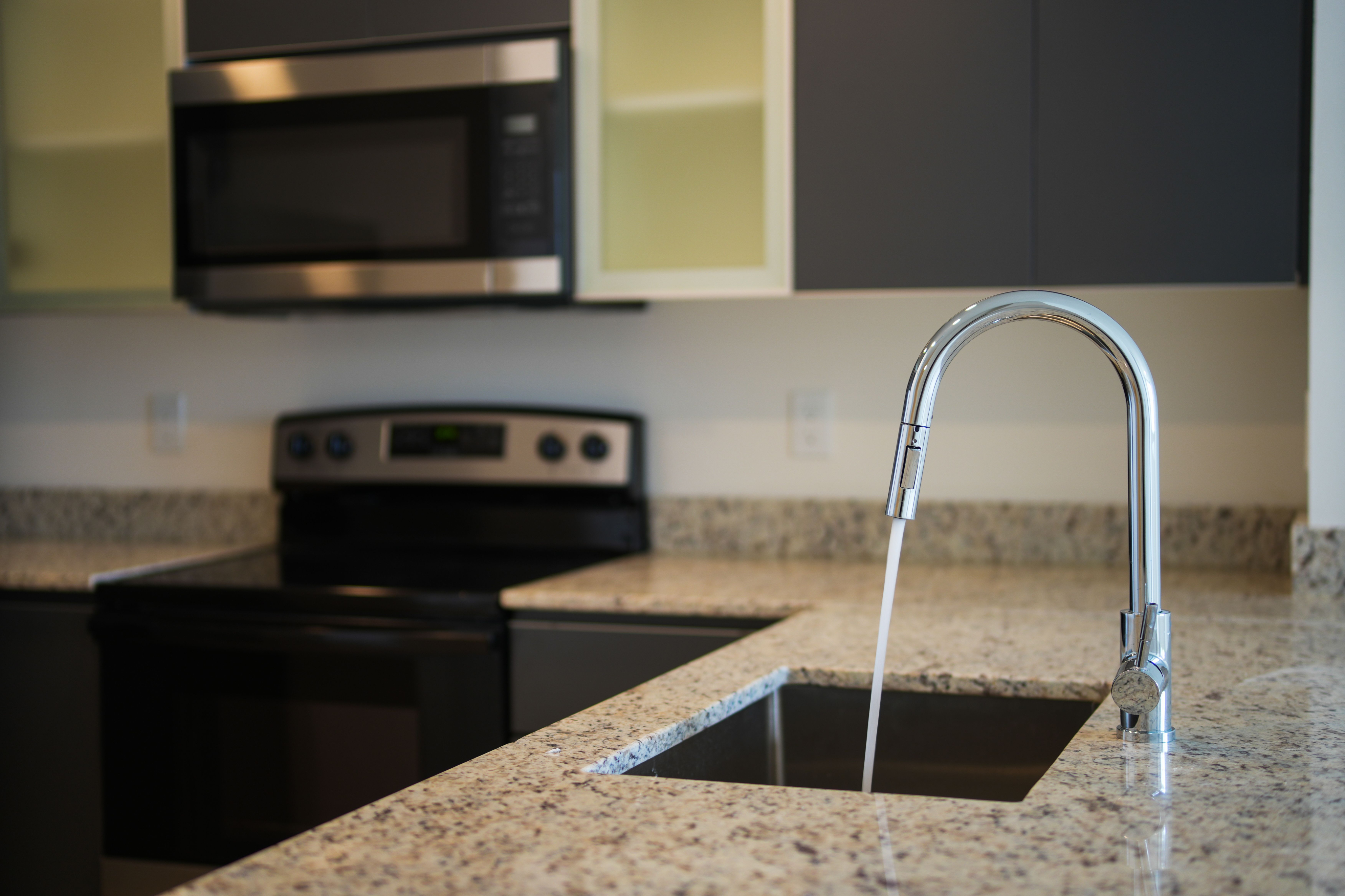

Quick Answer: Utilities included in apartments means your landlord folds some essential services into your monthly rent instead of billing them separately. Most often that covers water, sewer, and trash, while electricity and internet stay your responsibility. A true all-inclusive lease is rarer and usually costs more. Always confirm the exact list in writing.
Utilities included in apartments sounds like a clean deal until you read the fine print. One listing means water and trash. The next means almost everything. The phrase covers a lot of ground, and what gets folded into your rent shapes your real monthly cost more than most renters expect. This guide explains what the term actually means, what counts as a utility, what's typically still on you, and how much it all costs. Compass Flats serves renters across New Braunfels, Texas, and you can size up layouts on our studio and one-bedroom floor plans while you budget.
What Does "Utilities Included" Mean in an Apartment?
Utilities included in apartments means a landlord pays for certain essential services and bundles the cost into your rent, instead of sending you a separate bill for each one. The exact list varies by property. Start with the utilities meaning itself: these are the basic services that keep a home livable, not extras like streaming.
Here's the catch. "Included" rarely means all of it. Most leases that advertise the perk cover water, sewer, and trash, then leave electricity and internet to you. A handful go further. Reading the lease, not the listing headline, is the only way to know for sure.
What Counts as a Utility Bill?
People often ask what includes utility bill totals, and the core list is short. The services almost everyone agrees on are electricity, natural gas, water, sewer, and trash collection. These are the apartment utilities that keep the lights on and the water running.
From there it gets fuzzy. Internet, cable, and phone often get grouped in for budgeting, though they aren't traditional utilities. Streaming subscriptions and cell service generally don't count. That distinction matters when a bank or landlord asks for a utility bill as proof of address, since those institutions usually accept only electric, gas, or water statements.
Are Utilities Included in Rent?
Are utilities included in rent? Sometimes, but not by default. Unless your lease spells it out, utilities are billed separately and land in your name. When a property does include them, it usually follows one of three patterns, and the gap between them can be a hundred dollars a month or more.
Setup
Covered by Rent
Paid by You
Where You'll See It
All-inclusive
Water, sewer, trash, gas, often electricity and internet
Little to nothing
Older buildings, some short-term and student housing
Tenant pays all
Nothing
Electricity, gas, water, sewer, trash, internet
Most single-family rentals
Partial (most common)
Water, sewer, trash
Electricity, gas, internet
Most apartment communities
Apartments With All Utilities Included
Apartments with all utilities included do exist, but they're the minority, and the convenience usually shows up in the rent. A landlord covering every service builds an estimate into your monthly price, often with a buffer for heavy users. That can be worth it if you value one predictable payment over chasing the cheapest possible bill. Finding an apartment complex with utilities included also spares you the hassle of opening four separate accounts before move-in, and it keeps a surprise summer spike from blowing up your budget.
What's the Average Cost of Utilities in an Apartment?
The average cost of utilities in an apartment runs roughly $150 to $400 a month, depending on size, climate, season, and how many people share the space. The cost of utilities in apartments climbs in extreme weather, when heating or cooling does the heavy lifting. Electricity is almost always the single biggest line item.
Apartment Utilities Cost Breakdown
Electricity leads the pack. As of 2024, the U.S. Energy Information Administration put the average residential electricity price at 16.5 cents per kilowatt-hour, with a typical household using about 865 kWh a month. State averages swing hard. The EIA reported Utah near $89 a month while Hawaii topped $200, which is why your climate matters as much as your habits.
Water is steadier. The U.S. Environmental Protection Agency estimates the average household spends more than $1,000 a year on water, around $83 a month, and sewer often rides on the same bill. Natural gas, trash, and internet fill out the rest, with gas climbing in winter for homes that heat with it. Newer communities with efficient appliances and good insulation tend to land at the lower end. You can check what a property offers on the community amenities page before you commit.
Frequently Asked Questions
1. Does "utilities included" usually cover electricity?
Usually not. Electricity is the most expensive and most variable utility, so landlords tend to keep it in the tenant's name. When a lease says utilities are included, assume that means water, sewer, and trash unless it specifically lists electric. Confirm it in writing before you sign anything.
2. Which utilities will I most likely pay myself?
Even in a building that includes some services, you'll often cover a few on your own. The most common tenant-paid utilities are:
Electricity, billed by your local power provider or a retailer you choose
Internet and cable, set up directly with a provider
Natural gas, in units that use it for heat, hot water, or cooking
3. Is internet considered a utility?
It depends who's asking. Day to day, most people treat internet as a must-have and budget it right alongside power and water. Officially, it's often excluded. Internet bills are usually not accepted as proof of residence, and many leases list it separately from the core utilities you're billed for.
4. How do I confirm what's included before signing?
Ask for it in writing. Request a sample of recent utility bills for the unit, and have the leasing office list exactly which services rent covers. One question on a tour saves real money later. If a listing only says "utilities included," push for the specific line items before you commit.
5. Do apartments with all utilities included cost more?
Often, yes. A flat, all-in rent usually bakes in an estimate for the services the landlord covers, sometimes with padding for high usage. For light users, paying utilities separately can work out cheaper. For anyone who wants one steady number every month, the trade can be well worth it.
The Bottom Line
So what does utilities included in apartments really come down to? Read the lease, not the headline. Most communities cover water, sewer, and trash while you handle electricity and internet, and the average tab lands somewhere between $150 and $400 a month. Knowing that upfront lets you compare listings on total cost, not just base rent. Tour Compass Flats in New Braunfels, explore the photo gallery and virtual tour , or start your search on our homepage to see how the numbers add up.
Quick Answer: The New Braunfels commute to Austin runs about 48 miles up Interstate 35, a drive of roughly 45 to 60 minutes each way depending on traffic. Living in New Braunfels and working in Austin trades a slightly longer drive for lower housing costs, river-town living, and quick access to both major metros.
Plenty of Austin workers have done the math and moved south. The New Braunfels commute to Austin puts you about 48 miles from the capital while cutting your rent or mortgage compared with almost anything inside the Austin metro. Compass Flats sits right in the middle of that trade-off, serving New Braunfels renters who want Hill Country living with a workable drive north. Here's what the commute, the cost savings, and the neighborhoods actually look like in 2026.
What Is the New Braunfels Commute to Austin Really Like?
The New Braunfels commute to Austin is a straight shot up I-35, the highway that links New Braunfels, San Marcos, and Austin. A non-stop drive is around 46 minutes. Add rush hour and that number climbs fast, so most daily commuters plan for 60 to 75 minutes during peak times. The route is simple, but the traffic isn't always.
How Far Is New Braunfels From Austin?
New Braunfels sits about 48 miles southwest of downtown Austin, according to U.S. Census Bureau geographic data for the city. By car the distance austin to new braunfels measures roughly 48 to 49 miles along I-35 North, with Kyle and San Marcos marking the halfway stretch. It's close enough for a daily drive and short enough for a spontaneous weekend trip into the capital.
The New Braunfels to Austin Drive on I-35
The new braunfels to austin drive is predictable in the off-hours and busy at the edges of the workday. Free-flowing traffic gets you there in under an hour. Heavy congestion near Kyle, Buda, and south Austin can tack on 20 to 40 minutes. Some commuters peel off onto SH 130, the toll road east of I-35, to skip the worst bottlenecks heading into Austin. It costs more in tolls, but it can buy back real time on a bad afternoon.
New Braunfels Cost of Living vs Austin: What You Save
This is the part that moves people. The new braunfels cost of living sits close to the U.S. average and well below Austin's, driven mostly by housing. Independent cost indexes built on Census American Community Survey data put New Braunfels near a baseline of 100 against Austin's roughly 113. The gap shows up most clearly in what you pay for a place to live.
Cost Factor
New Braunfels
Austin
Cost-of-living index (US = 100)
~100
~113
Median home price
~$315K–$338K
~$513K
Average apartment rent
~$1,426/mo
~$1,573/mo
Daily commute to Austin jobs
~48 mi on I-35
In-city
A caveat worth stating plainly: rent and home-price figures vary by source and update monthly. As of May 2026, RentCafe pegged the average New Braunfels apartment at $1,426, down about 3% year over year, while home-price trackers like Redfin reported a median sale price closer to $338,000. The direction is consistent across all of them. New Braunfels housing runs hundreds of dollars a month cheaper than comparable Austin options. Browse current studio and one-bedroom floor plans to see where Compass Flats lands against those averages.
Best Places to Live in New Braunfels TX for Austin Commuters
The smartest places to live in new braunfels tx for an Austin commute sit on the north and east sides of the city, closest to I-35 on-ramps and Hunter Road. Shaving even a few minutes off your morning merge adds up over a year. Two school districts, New Braunfels ISD and Comal ISD, split the city, and the line can run down the middle of a street, so verify your campus by address before signing anything.
Top Neighborhoods in New Braunfels TX Near I-35
Among the commuter-friendly neighborhoods in new braunfels tx, a few stand out for their highway access:
Havenwood at Hunters Crossing sits between Gruene and San Marcos, the closest established community to the Austin side of the corridor.
Veramendi is a master-planned community in the heart of town with quick connections to I-35 and Loop 337.
River Place at Gruene offers a short drive to FM 306, which feeds straight onto the interstate.
Oak Run is an older, tree-lined neighborhood with easy Loop 337 access for north-bound drivers.
Champions Village New Braunfels
Champions village new braunfels is a quiet, family-oriented neighborhood southwest of Veramendi and northwest of Oak Run. Built starting in 2001, it features larger homes from roughly 1,700 to 3,100 square feet and earns consistent praise from residents for being clean, walkable, and well kept. With about 1,400 residents and close access to schools and shopping, it's a popular pick for commuters who want suburban calm without leaving the city limits.
If apartment living fits your stage better than a single-family home, the community amenities at Compass Flats include a pool, fitness center, coworking space, and game room, the kind of setup that softens a longer commute on both ends of the day.
Frequently Asked Questions
1. Is New Braunfels a good place to live?
Yes, by most measures. New Braunfels has ranked among the fastest-growing U.S. cities for years, with Census Bureau estimates placing the population above 110,000 as of mid-2023 and climbing since. Residents point to river recreation, German-Texan culture, strong schools, and a cost of living below both Austin and San Antonio as the main draws.
2. How far is New Braunfels from Austin by car?
By car, New Braunfels is about 48 miles from downtown Austin, almost entirely along I-35 North. A non-stop trip takes roughly 46 minutes in light traffic. During morning and evening rush hours, plan for 60 to 75 minutes each way, especially through the Kyle and Buda stretch south of the city.
3. What is the best route for the New Braunfels to Austin commute?
I-35 North is the direct and most common route, passing San Marcos at the midpoint. When the interstate backs up near south Austin, many commuters switch to the SH 130 toll road, which runs parallel to the east. It adds toll costs but often saves time during peak congestion.
4. Can you commute daily from New Braunfels to Austin?
Many people do, though it's a real commitment. A daily round trip averages 90 minutes to two-plus hours of driving once traffic is factored in. It works best for hybrid schedules, flexible start times, or jobs on the south side of Austin. Test-drive your exact route at rush hour before committing.
5. Why do people choose New Braunfels over Austin suburbs?
The pull is lower housing costs paired with a distinct lifestyle. New Braunfels offers the Comal and Guadalupe Rivers, Gruene's historic district, and a small-town feel that closer-in Austin suburbs have largely lost. For many buyers and renters, the savings on rent or a mortgage more than offset the extra miles on I-35.
Is the New Braunfels Commute to Austin Worth It?
For a lot of people, yes. The New Braunfels commute to Austin asks for about 48 miles and an hour of your morning in exchange for cheaper housing, river access, and a city that's growing for good reasons. If the math works for your schedule and your job's location, New Braunfels gives you Austin's paycheck reach without Austin's price tag. Take a photo tour of Compass Flats to picture what daily life on the New Braunfels end of that commute could look like.
Quick Answer: Living in New Braunfels puts you about 30 miles up I-35 from San Antonio, close enough for a 35- to 40-minute commute on most days. You get lower rent than the city, no state income tax, and Hill Country rivers out your door. It suits commuters who want space without giving up access to San Antonio jobs.
Living in New Braunfels gives you a front-row seat on the I-35 corridor, halfway between San Antonio and Austin. That location is the whole pitch. You trade big-city rent for Hill Country space while staying close enough to commute. Compass Flats sits minutes from the I-35 on-ramp, serving New Braunfels renters who work in San Antonio but want to come home to something quieter.
What Is Living in New Braunfels, TX, Really Like?
Living in New Braunfels, TX means a city of more than 104,000 people that still feels like a town. It's the seat of Comal County and a German settlement founded back in 1845, known today for the Comal and Guadalupe Rivers, Gruene's historic dance hall, and the Schlitterbahn waterpark. The pace is relaxed. The commute is real.
The population in New Braunfels TX has climbed fast. The Census Bureau's 2024 estimate counted just over 104,000 residents, and several projection sites put the 2026 number higher, somewhere between roughly 117,000 and 128,000 depending on which source you trust. That spread is worth a flag: the official count and the third-party projections don't agree, so treat any single figure as a ballpark. Either way, growth this quick brings new restaurants and shops along with more cars merging onto I-35 each morning. Most newcomers are families and young professionals, and the public schools rate well.
How Far Is the Commute From New Braunfels to San Antonio?
The distance from San Antonio to New Braunfels is roughly 30 to 32 miles along I-35, and the drive into downtown takes about 35 to 40 minutes outside of peak traffic. That's the daily reality for thousands of people who chose New Braunfels to San Antonio as their commute. Rush hour, weather, and the never-ending I-35 construction can stretch that by 15 to 30 minutes.
Plan your departure and it stays manageable. Traffic peaks on weekday mornings from about 7 to 9 and again from 4 to 7, so leaving a little early genuinely pays off. VIA Metropolitan Transit runs regional park-and-ride service toward central San Antonio if you'd rather skip the wheel some days. And the same stretch of freeway connects you north to Austin in under an hour when the weekend rolls around.
Destination
Distance via I-35
Typical drive time
San Antonio (downtown)
~30–32 miles
35–40 min
San Marcos
~19 miles
20–25 min
Austin (downtown)
~48–50 miles
50–60 min
Houston
~175 miles
2 hr 40 min
So a daily drive into San Antonio is short, Austin is a comfortable day trip, and the haul to Houston is a weekend, not a commute. If you want to land near the on-ramp, the available studio and one-bedroom floor plans show what's open right now.
Is New Braunfels TX Safe, and What Does It Cost?
Is New Braunfels TX safe? For a city its size, yes, with the usual caveats. FBI-based analyses show violent crime well below the national average, while property crime, mostly theft, runs closer to or just above it. Safety also varies by neighborhood, so where you land matters more than the citywide figure.
The cost of living in New Braunfels TX sits near the national average, though estimates vary by provider. Salary.com and PayScale place it about 5 to 7 percent below the U.S. baseline, while a couple of other indexes call it roughly even. Housing is the swing factor. As of May 2026, RentCafe pegged the average New Braunfels apartment at $1,426 a month, with one-bedrooms near $1,257, both under San Antonio's pricier core and well below Austin. Texas charges no state income tax, so more of your paycheck stays in your pocket. One line item newcomers underestimate: summer electric bills. Cooling a home through a Texas July is the cost that surprises people most.
Frequently Asked Questions
1. What is the population in New Braunfels TX?
As of the U.S. Census Bureau's 2024 estimate , the population in New Braunfels TX was just over 104,000, ranking it among the fastest-growing cities in the state. Local 2026 projections run higher, between roughly 117,000 and 128,000, since the city has been adding residents at around 5 to 6 percent a year.
2. What is the New Braunfels TX area code?
The New Braunfels TX area code is 830. It was created in 1997 in a split from San Antonio's 210 area code to handle the region's rapid growth, and it now covers much of the Texas Hill Country. There's no overlay, which means 830 is still the only code for the area.
3. How far is New Braunfels TX to Houston TX?
Driving from New Braunfels TX to Houston TX covers about 175 miles and takes roughly 2 hours and 40 minutes, mostly along I-10 after you leave the I-35 corridor. It's an easy weekend trip but far too long for a daily commute. Austin, by comparison, sits under an hour north.
4. What cities are close to New Braunfels Texas?
Several cities close to New Braunfels Texas make day trips and job options easy:
San Marcos, about 19 miles north on I-35
Seguin, roughly 17 miles east
Canyon Lake, around 16 miles northwest
Schertz and Cibolo, just southwest toward San Antonio
San Antonio itself, about 30 miles down I-35
5. What are the best places to live in New Braunfels TX?
The best places to live in New Braunfels TX depend on your commute. Neighborhoods on the south and west sides shave minutes off the San Antonio drive, while areas near the rivers and Gruene trade a longer trip for charm. Renters who want a quick I-35 on-ramp often start with newer communities. Tour the photo gallery and virtual tour to compare.
The Bottom Line on Living in New Braunfels
Living in New Braunfels is a numbers game that usually works in the commuter's favor. You give up a few miles of I-35 each morning and gain lower rent, no income tax, and weekends on the Guadalupe. The drive to San Antonio stays short if you respect rush hour, and the rest of central Texas is within easy reach. For anyone weighing the move, this stretch of the corridor offers a rare mix of value and access. Explore the community amenities at Compass Flats and picture your own I-35 routine.
Quick Answer: Moving to New Braunfels in 2025 means settling into one of the fastest-growing cities in Texas, sitting on I-35 between San Antonio and Austin. The U.S. Census counted 91,640 residents in 2020, and city estimates now put the population near 124,000. Expect no state income tax, two spring-fed rivers, and median rents around $1,400 a month.
Moving to New Braunfels drops you into the heart of the Texas Hill Country, a German-founded river town that keeps showing up on "fastest-growing" lists. The 2020 Census recorded 91,640 people. City figures shared in late 2025 put that number closer to 124,000, a jump of roughly 35% in five years. Compass Flats serves this community with studio and one-bedroom apartments, so you can browse available floor plans while you plan the logistics of your move.
What should you know before moving to New Braunfels?
New Braunfels sits in Comal County, about 32 miles northeast of downtown San Antonio and roughly 48 miles south of Austin. You get German heritage, the Comal and Guadalupe rivers, no state income tax, and a steady stream of new arrivals. Housing cooled a little after the 2024 peak, which gives newcomers some breathing room.
The town was founded in 1845 by German settlers, and that history still shapes daily life. Wurstfest draws crowds every fall. Gruene Hall, the state's oldest continually operating dance hall, books live music most nights. Summers run hot, so plan for high cooling bills from June through September.
Three quick things newcomers tend to underestimate: the tubing crowds in summer, the property tax bill that replaces the missing income tax, and how car-dependent the city is. Public transit exists but stays limited, so most residents drive.
Why is New Braunfels so popular?
New Braunfels is popular because it offers small-town pace with big-city access. Location does most of the heavy lifting. You can live near the rivers and the Hill Country while reaching jobs in two major metros within an hour. Add affordable housing relative to Austin, strong schools, and a busy tourism economy, and the appeal lines up.
The growth isn't only about people. The local hospitality sector generated a reported $1.3 billion economic impact in 2024, and the city now markets itself as a year-round destination rather than just a summer tubing stop. That tourism base supports retail, restaurants, and hotel jobs that many residents fill.
Here's what tends to draw people in:
Easy I-35 access to San Antonio and Austin job markets
Home prices generally well below comparable Austin properties
The Comal and Guadalupe rivers for tubing, kayaking, and fishing
German Texan culture, from Naegelin's Bakery to Wurstfest
No state income tax across all of Texas
Want amenities that match that lifestyle? You can see the community amenities , including the pool, fitness center, and coworking space, before you commit.
What is the cost of living in New Braunfels TX?
Cost of living in New Braunfels TX lands close to the national average, with housing as the swing factor. Published indexes disagree. Some put the city a few points below the U.S. average, others a few points above. Most agree it stays well below Austin while sitting a touch higher than many smaller Texas towns.
That disagreement is worth flagging honestly. PayScale and Salary.com both estimated New Braunfels slightly below the national average in 2025, while BestPlaces put it near 10% above. The gap comes down to how each source weights housing and which neighborhoods they sample. Use the figures below as a starting point, not a precise budget.
Relocation metric
New Braunfels figure
Context
Average rent
~$1,426/month
RentCafe, mid-2026; down about 3% year over year
Median home value
~$354,000
Generally a third less than comparable Austin homes
Median household income
~$86,000
Above the Texas statewide median
State income tax
None
Offset by higher property taxes
Sales tax
8.25%
State plus local combined
Drive to San Antonio
~32 miles / 35 to 40 min
Via I-35, outside rush hour
One caveat on rent. As of mid-2026, RentCafe pegged the average New Braunfels rent near $1,426, a slight drop from the year before. That softening reflects new apartment supply catching up with demand, so timing your lease can matter.
How does New Braunfels TX to San Antonio TX commuting work, and where are the New Braunfels city limits?
The New Braunfels TX to San Antonio TX drive runs about 32 miles down I-35, taking 35 to 40 minutes in normal traffic. The New Braunfels city limits stretch across both Comal and Guadalupe counties, with Comal serving as the county seat. The federal government even names the region the San Antonio-New Braunfels metro area.
For daily commuters, timing is everything. I-35 backs up between 7 and 9 in the morning and again from 4 to 6 in the evening, so a 35-minute trip can stretch past an hour. VIA Metropolitan Transit runs park-and-ride options into San Antonio for residents who'd rather skip the wheel. Austin sits farther out, roughly 50 to 60 minutes north depending on traffic and whether you use the toll road.
Because the city spans two counties, your tax rates, school district, and even some utility providers can vary by address. Confirm which side of the county line a property sits on before you sign. You can tour the property through photos to get a feel for the location and finishes.
Frequently Asked Questions
Is New Braunfels a good place to live in 2025?
Yes, for many movers. New Braunfels pairs river-town recreation with quick highway access to San Antonio and Austin jobs. The tradeoffs are hot summers, summer tubing traffic, and property taxes that replace the absent state income tax. Families and remote workers tend to rate it highly.
How much does it cost to live in New Braunfels TX?
Plan around a few core numbers. Average rent sits near $1,426 a month, the median home value runs about $354,000, and the median household income is roughly $86,000. Texas charges no state income tax, but property taxes and the 8.25% sales tax help the state recover revenue.
Why is New Braunfels growing so fast?
Several forces stack up:
A location between two booming metros on I-35
Housing cheaper than Austin or central San Antonio
A tourism economy worth over a billion dollars a year
No state income tax and a business-friendly climate
The result is roughly 5% annual population growth in recent years.
How far is New Braunfels from San Antonio?
About 32 miles separate the two, a 35 to 40 minute drive on I-35 outside of rush hour. Heavy traffic can push that past an hour. There's no commuter rail, but VIA park-and-ride buses and rideshare services connect the cities for residents who prefer not to drive every day.
What counties is New Braunfels in?
New Braunfels spans Comal County and Guadalupe County, with Comal as the county seat. That two-county split means tax rates, school assignments, and utilities can differ by address. Always verify which county a home falls in before leasing or buying, since it affects your monthly costs.
Conclusion
Moving to New Braunfels in 2025 puts you in a fast-growing Hill Country city with rivers out the door and two major job markets within an hour. The cost of living tracks close to the national average, housing beats Austin, and the German Texan culture gives the place real character. If you're ready to settle in, take a look at the Compass Flats community in New Braunfels to start your search.
META TITLE:
5 Questions to Ask Before Renting an Apartment in New Braunfels, TX
META DESCRIPTION:
Before signing a lease in New Braunfels, ask these 5 critical questions about utilities, lease terms, pet policies, amenities, and maintenance. Protect yourself as a renter.
URL SLUG:
5-questions-ask-before-renting-apartment-new-braunfels-tx
Quick Answer: Before signing a lease in New Braunfels, ask about what utilities are included, the exact lease terms and move-in costs, pet policies and fees, available amenities, and the landlord's maintenance response time. These five questions protect your rights and help you make an informed decision.
Introduction
Moving to New Braunfels, Texas, is an exciting transition. Whether you're relocating for work, school, or a fresh start, finding the right apartment matters. But before you sign that lease, you need to ask the right questions.
Too many renters in New Braunfels rush through the apartment search and overlook critical details. Then they face unexpected costs, limited amenities, or frustrating interactions with landlords. The good news? Asking five key questions upfront can save you money, time, and headaches.
This guide covers the five essential questions every renter should ask before committing to an apartment in New Braunfels. You'll understand what to look for, what to avoid, and how to protect yourself as a tenant.
1. What Utilities Are Included in the Rent?
This is the most common question renters overlook—and it's a mistake. Utilities can add hundreds to your monthly housing costs if you're not prepared.
What to Ask Specifically
Don't just ask, "Are utilities included?" Get specific. Ask which utilities are covered: water, electricity, gas, trash, sewer, and internet. New Braunfels apartments vary widely in what they include. When evaluating Compass Flats Apartments or other properties, request a detailed breakdown before signing.
Example breakdown:
Compass Flats Apartments might include water and trash in base rent
You'll likely pay your own electricity and gas
Internet is rarely included—expect $40–80/month
Why This Matters
In New Braunfels, summer temperatures regularly exceed 95°F. Your air conditioning costs can spike in July and August. Understanding what's included helps you budget accurately for the real total cost of living. Ask for examples of utility bills from previous months. This gives you a realistic picture of what to expect seasonally.
---
2. What Are the Exact Lease Terms and Move-In Costs?
Lease agreements can be complex. Many renters don't read them carefully and face surprises later.
Key Details to Confirm
Before signing, get clear answers on:
Lease length: 6 months, 12 months, or flexible?
Move-in costs: First month, last month, security deposit, application fee?
Total upfront investment: Add it all up before you commit
Renewal terms: How much will rent increase when you renew?
Early termination: What happens if you need to break the lease?
Real-World Example
A typical move-in scenario in New Braunfels might look like this:
First month's rent: $1,200
Security deposit: $1,200
Application fee: $50–$75
Total due at signing: ~$2,450
Many renters budget only for rent and get caught off-guard by the security deposit and other fees. When comparing properties, understand that lease flexibility affects pricing. Some landlords offer better terms for longer commitments.
Early Termination Clause
Life happens. You might get a job offer elsewhere or face an unexpected move. Ask what the penalty is for breaking your lease early. Some New Braunfels apartments allow early termination with 30 days' notice and a small fee. Others might require you to pay rent for the remaining lease term.
---
3. What Is the Pet Policy—and What Are the Real Costs?
If you have pets, this question is non-negotiable. Pet policies vary dramatically between apartments in New Braunfels.
Specific Questions to Ask
Are pets allowed at all? (Some New Braunfels apartments don't allow any)
Is there a limit on the number of pets?
Are there breed or weight restrictions?
What is the non-refundable pet fee?
Is there a monthly pet rent? (Many apartments charge $20–$50/month per pet)
Is pet damage coverage included, or is it extra?
The Hidden Cost Trap
Many renters only ask about the upfront pet fee. But some New Braunfels apartments also charge monthly pet rent. If you have two cats or dogs, you could be paying $40–$100 extra every month. That adds up to $480–$1,200 per year. According to the Texas Apartment Association , understanding all pet-related costs is essential for accurate budgeting.
Get It in Writing
Never rely on a landlord's verbal promise about pets. Make sure the pet policy is clearly stated in your lease agreement before you sign.
---
4. What Amenities Are Available, and Which Require Extra Fees?
Apartment amenities are advertised prominently on websites, but not all amenities are included in your base rent.
Common Amenities in New Braunfels Apartments
Swimming pool (included or extra?)
Fitness center or gym
Parking (reserved, covered, or open lot?)
Washer/dryer in unit or community laundry?
Dog park or pet amenities
Community room or lounge
Concierge or 24-hour security
What to Ask
Don't assume. Specifically ask: "Which amenities are included in my rent, and which cost extra?" Some apartments charge additional monthly fees for reserved parking, premium fitness classes, or pet amenities. If comparing Gruene Point Apartments with other properties, request a complete amenities list with associated costs.
Assess Real Value
Ask yourself: Do I actually use this amenity? If you're not a swimmer, paying for pool access is a waste. If you work from home, is an on-site fitness center worth the extra cost? Prioritize amenities that match your lifestyle.
---
5. How Quickly Does the Landlord Respond to Maintenance Requests?
Maintenance responsiveness directly affects your quality of life and your rights as a tenant in Texas.
What to Ask
How do I submit maintenance requests? (Phone, app, email, in-person?)
What is the average response time for routine requests?
What happens if there's an emergency (no hot water, broken AC in summer)?
Is there a 24-hour emergency line?
Texas Tenant Rights Context
According to the Texas Property Code (Property Code § 92.008) , landlords must maintain habitable living conditions, including functioning heating and cooling. In New Braunfels summers, a broken AC isn't a minor inconvenience—it's a serious issue. Confirm that emergencies are handled quickly. The State Bar of Texas provides resources on tenant rights that protect you in these situations.
Red Flags
If the landlord is slow to answer your initial questions or seems dismissive about maintenance, that's a warning sign. Maintenance responsiveness rarely improves after you've signed a lease.
---
Bonus Question: Can You Visit the Actual Unit You'll Rent?
Never sign a lease for an apartment you haven't seen in person. Photos and virtual tours don't show everything.
Visit during different times of day. Check:
Natural lighting at morning and evening
Noise levels from neighbors and nearby traffic
Water pressure and appliance condition
Closet and storage space
Overall cleanliness and maintenance of common areas
---
Common Mistakes Renters Make in New Braunfels
1. Not Reading the Lease
Many renters skim or skip the lease entirely. This is risky. Lease agreements contain critical information about your rights and responsibilities. Read every page, or have someone knowledgeable review it with you.
2. Skipping the Move-In Inspection
Request a move-in inspection. Document any existing damage with photos. This protects your security deposit. Without documentation, you could be charged for pre-existing damage when you move out.
3. Not Asking About Renewal Rent Increases
Your base rent might be great, but what happens at lease renewal? Some New Braunfels apartments increase rent by 5–10% annually. Ask about the expected increase before you sign the initial lease.
4. Underestimating True Monthly Costs
Add up rent, utilities, pet fees, parking, and any other charges. Many renters budget for rent alone and shock themselves when the full bill arrives. Understanding the complete cost of living in New Braunfels helps you set realistic budgets.
---
Making Your Decision: A Checklist
Before signing a lease in New Braunfels, check off these items:
☐ Understand all utility costs (included and not included)
☐ Confirm total move-in costs and lease terms
☐ Get pet policy details in writing
☐ Know which amenities are included vs. extra fees
☐ Confirm maintenance response times
☐ Visit the actual unit at different times
☐ Read the entire lease agreement
☐ Schedule a move-in inspection
☐ Get all agreements in writing
---
FAQ: Common Questions About Renting in New Braunfels
Q1: Are utilities typically included in New Braunfels apartment rent?
Most New Braunfels apartments include water and trash but not electricity, gas, or internet. Always confirm which utilities are covered in your specific lease. This varies significantly between properties.
Q2: What is the average security deposit in New Braunfels?
Security deposits in New Braunfels typically equal one month's rent. Some properties may charge more, while others charge less. Your lease should specify the exact amount and refund conditions.
Q3: Can a landlord raise my rent during my lease term in New Braunfels?
No, Texas law protects tenants. A landlord cannot raise rent during your lease term. Increases can only happen at renewal. However, confirm your lease term length before signing.
Q4: What should I do if the landlord won't fix something broken in my apartment?
Document the issue with photos and dates. Send a written request for repairs. Texas law requires landlords to maintain habitable living conditions. If repairs aren't made, contact the City of New Braunfels Housing and Community Services or consult a tenant's rights organization.
Q5: How much notice must a landlord give before entering my apartment?
In Texas, landlords must provide at least 24 hours' notice before entering a rental unit, except in emergencies. Confirm this in your lease agreement.
Q6: Can I negotiate rent or lease terms with a New Braunfels apartment complex?
Yes, especially if you're a strong tenant (good credit, stable income, references). Don't be shy about negotiating move-in specials, rent reduction, or lease flexibility. Many properties have room to negotiate.
Exploring Your Options in the Area
New Braunfels offers several excellent apartment communities. If you're interested in nearby alternatives, consider exploring properties in the Gruene Historic District area , which provides apartment options close to local attractions. For renters comparing regions, understanding the cost of living across Texas cities like Houston and San Antonio can help you make a regional choice. Those considering San Marcos might look at Texas State University area housing options .
Conclusion
Renting an apartment in New Braunfels is a significant decision. By asking these five questions—about utilities, lease terms, pet policies, amenities, and maintenance—you'll make an informed choice that protects your interests and budget.
Don't rush the process. Take time to visit potential apartments, read leases thoroughly, and get everything in writing. Good communication with your landlord starts before move-in and sets the tone for your entire tenancy.
Ready to find your perfect apartment in New Braunfels? Start by using this checklist with every property you consider. Your future self will thank you for asking the right questions today.
Quick Answer
A notice to vacate is a formal written notice — from either the landlord or the tenant — that the tenancy will end by a specific date. An eviction letter (also called an eviction notice) is a legal document a landlord issues when a tenant has violated the lease, demanding they correct the issue or leave. A notice to vacate can be routine; an eviction letter is the first step in a legal process that can lead to a court-ordered removal.
If you've received a letter from your landlord about leaving your apartment — or you're trying to understand your rights as a renter — the terminology matters. "Notice to vacate" and "eviction letter" are often used interchangeably in casual conversation, but they are legally distinct documents with very different implications.
Confusing the two can cause renters to either panic unnecessarily or, far more dangerously, underreact to a serious legal situation. This guide explains both documents clearly, walks through what each one means for you, and tells you exactly what to do if you receive either one.
What Is a Notice to Vacate?
A notice to vacate is a written notification that a tenancy is ending. It can be issued by a landlord to a tenant, or by a tenant to a landlord. It simply communicates that one party intends to end the rental agreement and that the property should be vacated by a specific date.
A notice to vacate is not inherently adversarial. It is often a routine part of ending a month-to-month tenancy, choosing not to renew a lease, or giving proper notice before moving out. In most states, landlords are required to give a set amount of advance notice — typically 30 or 60 days — before asking a tenant to leave without cause.
Common reasons a landlord may issue a notice to vacate include:
The lease is expiring and will not be renewed
The landlord intends to sell the property
The landlord or an immediate family member plans to move into the unit
The property is being taken off the rental market
The tenant is on a month-to-month agreement and the landlord wants to end it
Common reasons a tenant may issue a notice to vacate include:
Moving out at the end of a fixed-term lease
Ending a month-to-month tenancy with proper advance notice
Breaking a lease early (with notice, per lease terms)
What Is an Eviction Letter (Eviction Notice)?
An eviction letter — more precisely called an eviction notice or notice to quit — is a formal legal document a landlord issues when a tenant has violated the terms of their lease or rental agreement. It is not simply a request to leave. It is the first official step in the eviction process, which is a court-supervised legal procedure.
An eviction notice typically either demands that the tenant correct a specific violation within a set number of days (a "cure or quit" notice) or requires the tenant to vacate the property entirely because the violation is severe or non-correctable (an "unconditional quit" notice).
Common reasons a landlord may issue an eviction notice include:
Nonpayment of rent
Repeated lease violations (noise complaints, unauthorized pets, smoking)
Significant property damage caused by the tenant
Illegal activity occurring in the unit
Unauthorized occupants or subletting
Continued violation after a prior warning
Receiving an eviction notice does not mean you have been evicted. It means the eviction process has started. You still have rights — and specific windows of time to act.
Key Differences: Notice to Vacate vs. Eviction Letter
Feature
Notice to Vacate
Eviction Letter / Notice
Who can issue it
Landlord or tenant
Landlord only
Reason for issuance
Routine end of tenancy, lease non-renewal, move-out notice
Lease violation, nonpayment of rent, illegal activity
Tone and nature
Administrative; not necessarily adversarial
Legal; formal first step in eviction proceedings
Typical notice period
30 to 60 days (varies by state)
3 to 30 days depending on type and state
Can tenant stay?
Generally no, unless they negotiate a new agreement
Sometimes yes, if the violation is cured within the deadline
Does it lead to court?
Only if tenant refuses to leave after the deadline
Yes, if tenant does not comply — landlord files for eviction hearing
Appears on rental history?
Generally no
A court eviction (unlawful detainer) can appear on records
Tenant's best response
Acknowledge, plan your move-out, give proper counter-notice if required
Act immediately — cure the violation, seek legal advice, or prepare a response
Types of Eviction Notices Explained
Not all eviction letters are the same. Understanding which type you've received changes what your options are.
Pay or Quit Notice
The most common type. Issued when a tenant has not paid rent. It gives the tenant a short window — typically 3 to 5 days depending on the state — to pay the full amount owed or vacate the property. If the tenant pays in full within the deadline, the eviction process stops.
Cure or Quit Notice
Issued when a tenant has violated a specific lease term that can be corrected — such as having an unauthorized pet, causing excessive noise, or having an unapproved occupant. The tenant is given a set number of days to fix the violation ("cure it") or leave. If corrected, the tenancy continues.
Unconditional Quit Notice
The most serious type. The tenant is ordered to vacate with no option to correct anything. These are issued for severe violations — illegal activity in the unit, major property damage, repeated violations after prior notices, or in some states, habitual late rent payment. There is no cure period; the tenant must leave by the deadline.
No-Fault Notice to Vacate
In some jurisdictions, landlords can require a tenant to leave even without any lease violation. This is typically called a "no-fault eviction" or a "no-cause notice." It is most common in month-to-month tenancies. Some states and cities — including California, New York, and Oregon — have passed just-cause eviction protections that restrict or ban no-fault evictions for long-term tenants.
Step-by-Step: What to Do If You Receive an Eviction Notice
Read the notice carefully and completely. Identify the type of notice, the specific reason stated, the deadline given, and what action is being demanded. The exact wording matters legally.
Check the date and deadline. Count the days from the date on the notice, not from when you received it. Some states count business days; others count calendar days. Missing the deadline forfeits your options.
Verify the notice is legally valid. Eviction notices must meet specific state requirements — proper format, correct delivery method, accurate information. An improperly served or incomplete notice may be unenforceable. Check your state's requirements.
Determine if the violation can be cured. If you received a pay-or-quit or cure-or-quit notice, assess immediately whether you can correct the issue within the deadline. Paying overdue rent in full typically stops the process immediately.
Contact a local tenant rights organization or legal aid office. Many provide free advice to renters. Acting fast is critical — the deadlines in eviction notices are short.
Document everything. If you pay rent owed, get a written receipt. If you correct a violation, document it with photos or written confirmation. Keep copies of all communication with your landlord.
Do not ignore the notice. If you receive an eviction notice and take no action, the landlord can file an unlawful detainer lawsuit with the court. A court judgment against you is far more damaging than the original notice — it can appear on tenant screening records and make renting again very difficult.
Attend any court hearing. If the matter proceeds to court, always attend. Failing to appear almost always results in a default judgment against you.
Step-by-Step: What to Do If You Receive a Notice to Vacate
Confirm the notice period required by your lease and state law. If the notice period given is shorter than what your state requires, the notice may be invalid. Most states require 30 days' notice for month-to-month tenancies; some require 60 days for tenants who have lived in the unit for more than one year.
Review your lease for move-out obligations. Note any cleaning requirements, key return procedures, forwarding address notification, and security deposit timelines.
If you want to stay, respond in writing promptly. If you believe the notice is improper or you want to negotiate, communicate with your landlord in writing — and quickly. Verbal agreements about extended stay periods are very hard to enforce.
Begin planning your move immediately. Even if you're disputing the notice, start your moving timeline so you're not caught without options close to the deadline.
Document the unit's condition before you leave. Photograph every room on your final day. This protects your security deposit against unfair damage claims.
Return all keys and get written confirmation. Request a written receipt or email confirmation of your move-out date and key return. This establishes the official end of your tenancy.
Notice Requirements by Tenancy Type
Tenancy Type
Typical Notice to Vacate Period
Who Provides Notice
Notes
Month-to-Month
30 days (some states: 60 days)
Either party
Some states require longer notice for long-term tenants
Fixed-Term Lease (ending)
30–60 days before expiration
Either party (if required by lease)
Many leases auto-convert to month-to-month if no notice is given
Fixed-Term Lease (broken early)
Per lease early termination clause
Tenant
Early termination fees may apply; review lease carefully
Week-to-Week
7 days
Either party
Less common; typically applies to short-term or informal arrangements
Pay or Quit (nonpayment)
3–5 days (varies by state)
Landlord only
Paying rent owed in full typically stops the process
Cure or Quit (violation)
3–30 days (varies by state and violation)
Landlord only
Correcting the violation within the period halts the eviction
Unconditional Quit
3–30 days
Landlord only
No cure option; tenant must vacate by deadline
Can a Landlord Evict You Without a Notice?
No. In all U.S. states, a landlord must follow the legal eviction process — which begins with a properly served written notice. A landlord cannot legally remove a tenant by:
Changing the locks without court authorization (illegal lockout)
Removing doors, windows, or appliances to force the tenant out
Shutting off utilities to make the unit uninhabitable
Removing the tenant's belongings without a court order
Physically threatening or intimidating the tenant
These actions are called "self-help evictions" and are illegal in every U.S. state. If a landlord attempts any of these, the tenant may have the right to sue for damages — sometimes significantly more than the value of the tenancy itself.
If you experience any of the above, contact a local tenant rights organization or law enforcement immediately and document everything.
How the Formal Eviction Process Works
If a tenant does not comply with a valid eviction notice, the landlord must go through the courts to remove them. The tenant cannot simply be removed — even after the notice deadline passes. Here is how the process typically unfolds:
Landlord files an unlawful detainer lawsuit (the formal name for an eviction lawsuit) with the local courthouse after the notice period expires.
The tenant is served with court papers notifying them of the hearing date and their right to respond.
Both parties appear before a judge , who hears the case and makes a ruling. Tenants have the right to present a defense.
If the judge rules for the landlord , a "writ of possession" is issued authorizing law enforcement to remove the tenant if they have not vacated.
A sheriff or marshal carries out the removal — not the landlord directly. This gives the tenant a final opportunity to leave voluntarily before a forced removal.
This entire process typically takes several weeks to several months depending on the state, local court backlog, and whether the tenant contests the eviction. During this time, the tenant generally has the right to remain in the unit.
Common Mistakes Renters Make When They Receive These Notices
Assuming a notice to vacate means they're being evicted. A routine notice to vacate from a landlord ending a month-to-month tenancy is not an eviction. Treat it accordingly — as a move-out deadline, not a legal emergency.
Ignoring an eviction notice. This is the costliest mistake. Ignoring it doesn't make it go away — it accelerates the process toward a court judgment that damages your rental history.
Paying rent late after receiving a pay-or-quit notice. Partial payment or payment after the deadline may not stop the eviction process in some states. Pay the full amount owed, on time, and get written confirmation.
Moving out without returning keys or getting written confirmation. Without a documented move-out date, disputes about when the tenancy ended — and who owes what — become much harder to resolve in your favor.
Believing verbal assurances from a landlord. If a landlord tells you verbally that they've withdrawn the notice or extended your deadline, get it in writing before relying on it.
Not attending the court hearing. Tenants who skip court hearings almost always lose by default judgment. Even if your defense is strong, it can only help you if you show up.
Tenant Protections Worth Knowing
Renter protections vary significantly by state and city, but some important ones to be aware of include:
Just-cause eviction laws — Several states and cities (including California, Oregon, New York City, and Seattle) require landlords to have a legally recognized reason before evicting a tenant, even at lease end.
Retaliation protections — In most states, a landlord cannot issue an eviction notice in retaliation for a tenant complaining about habitability issues, contacting a housing inspector, or organizing with other tenants. Retaliatory eviction is illegal.
Domestic violence protections — Many states allow survivors of domestic violence to break a lease without penalty or contest eviction proceedings with specific legal protections.
COVID-era protections — Some local eviction moratoriums and tenant protections established during 2020–2022 may still have residual effects. Check current local law if relevant to your situation.
The U.S. Department of Housing and Urban Development (HUD) maintains a resource on tenant rights by state. The Nolo Legal Encyclopedia also provides state-specific eviction law guides that are regularly updated.
Frequently Asked Questions
Is a notice to vacate the same as an eviction?
No. A notice to vacate is a written communication that a tenancy will end — it can be issued by either party and is often routine. An eviction is a legal process initiated by a landlord when a tenant has violated the lease or failed to leave after a valid notice. Eviction requires a court proceeding; a notice to vacate does not, unless the tenant refuses to leave after the deadline.
How long does a landlord have to give you to move out?
For routine notices to vacate with no lease violation, most states require 30 days' notice for month-to-month tenancies. Some states require 60 days for tenants who have lived in the unit for more than a year. For eviction notices based on nonpayment or lease violations, the notice period is typically 3 to 30 days depending on the state and the type of violation.
Can I be evicted if I pay rent on time and follow the lease?
In states without just-cause eviction protections, a landlord can issue a no-fault notice to vacate even if you have not violated the lease — most commonly to end a month-to-month tenancy. In states and cities with just-cause protections (including California, Oregon, and New York City), the landlord must have a legally recognized reason to require you to leave, even at lease end.
What happens if I ignore an eviction notice?
If you ignore an eviction notice and do not comply by the deadline, the landlord can file an unlawful detainer lawsuit in court. If the judge rules in the landlord's favor, a writ of possession is issued and law enforcement can carry out a physical removal. A court eviction judgment can appear on tenant screening reports and make renting in the future significantly more difficult.
Can a landlord change the locks without going to court?
No. Self-help evictions — including changing locks, removing doors or windows, shutting off utilities, or removing a tenant's belongings without a court order — are illegal in all U.S. states. If your landlord attempts this, contact local law enforcement and a tenant rights organization immediately. You may be entitled to damages.
Does an eviction notice go on my record?
The notice itself does not automatically appear on your rental history. However, if the eviction proceeds to court and results in a judgment against you, that court record can be found by future landlords through tenant screening services. Some screening companies report filed eviction cases even if the tenant won. This is one reason why resolving disputes before court — whenever possible — is strongly in a renter's interest.
Conclusion
A notice to vacate and an eviction letter are not the same thing — and knowing the difference gives you the ability to respond appropriately. A routine notice to vacate calls for planning. An eviction notice calls for immediate, informed action.
In both cases, the worst thing you can do is nothing. Read every notice carefully, know your deadlines, document everything, and reach out to a local tenant rights organization if you have any doubts about your rights or next steps.
At Compass Flats Apartments , we believe informed renters are empowered renters. For more practical guidance on renting, browse our apartment living blog .