Quick Answer
A studio apartment combines your living and sleeping areas in one open space, while a 1-bedroom offers a separate, enclosed bedroom. Studios are cheaper and easier to maintain; 1-bedrooms provide more privacy and room to grow. For first-time solo renters, the right choice depends on budget, lifestyle, and how much space you actually need.
Introduction
Renting your first apartment solo is exciting — and a little overwhelming. One of the first decisions you'll face is choosing between a studio and a 1-bedroom apartment. Both can work well for a single person, but they serve different needs and budgets.
At Fusion at Rye, we work with first-time renters every day, and this is one of the most common questions we hear. This guide breaks down the real differences so you can make a confident decision.
What Is a Studio Apartment?
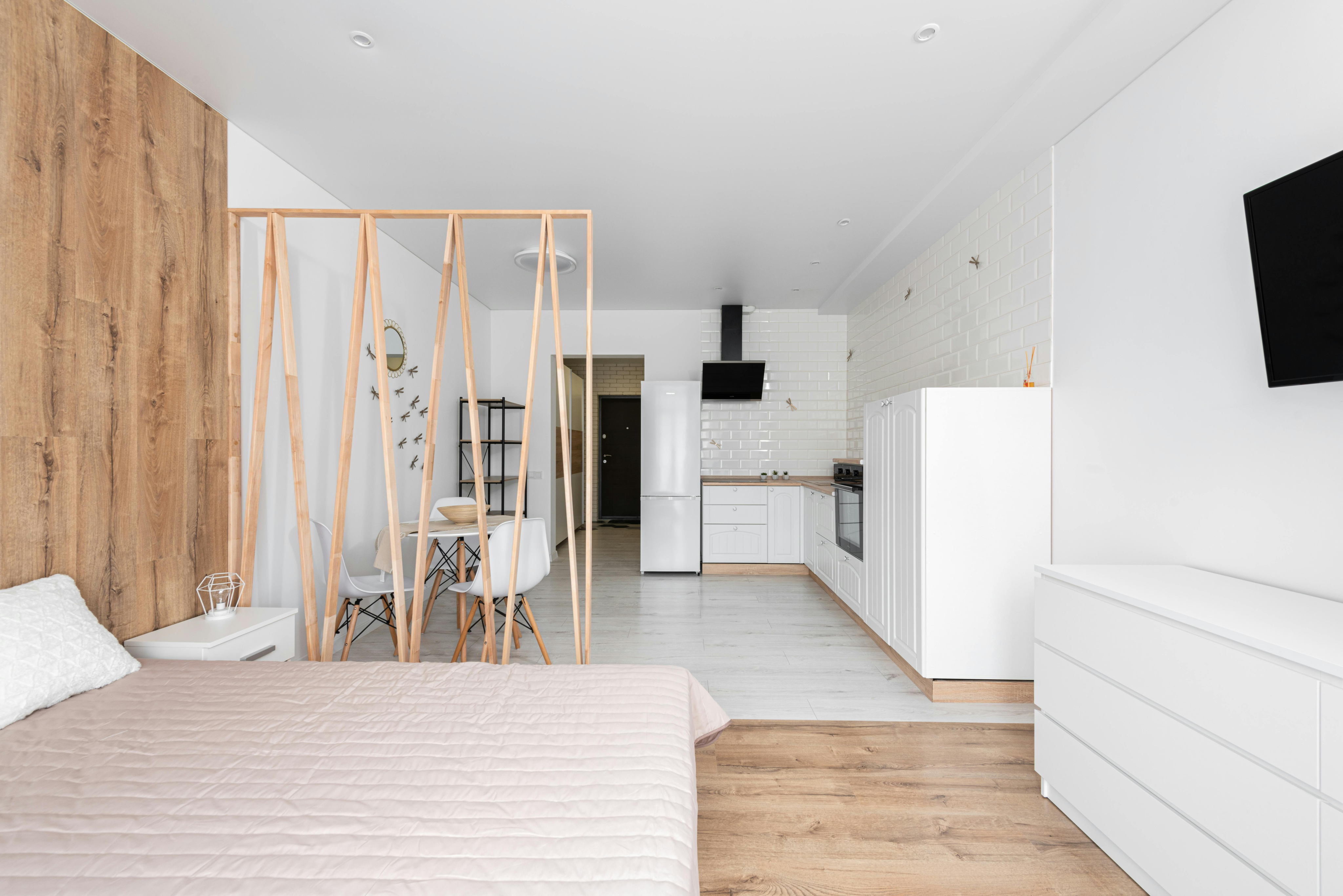
A studio apartment is a self-contained unit where the living room, sleeping area, and kitchen share one open floor plan. The only separate room is typically the bathroom.
Studios are generally the most affordable option in any rental market. They're compact — usually between 300 and 600 square feet — and often found in urban or high-density buildings.
If you're looking for small-space living tips, check out our guide: 10 Tips for a Soundproof Apartment
What Is a 1-Bedroom Apartment?
A 1-bedroom apartment has a separate enclosed bedroom along with a distinct living area, kitchen, and bathroom. This layout gives you genuine privacy between your sleeping and living spaces.
They typically range from 550 to 900+ square feet, depending on the building and location. The added space and layout flexibility come at a higher monthly cost.
Studio vs. 1-Bedroom: Key Differences at a Glance
| Feature | Studio | 1-Bedroom |
|---|---|---|
| Average Size | 300–600 sq ft | 550–900+ sq ft |
| Separate Bedroom | No | Yes |
| Average Monthly Cost | Lower, varies by market | Typically 15–30% more than studio |
| Best For | Budget-conscious renters, minimalists | Privacy seekers, remote workers |
| Guest Accommodations | Limited | More comfortable |
| Utility Costs | Generally lower | Slightly higher |
| Storage Space | Less built-in storage | More closet/storage options |
Cost Comparison: Which Is More Affordable?
Rent is usually the deciding factor. Studios consistently rent for less than 1-bedrooms in the same building or neighborhood. The gap can be anywhere from $100 to $500+ per month depending on your city.
But rent isn't the only cost. Consider:
- Utilities: Studios are smaller and typically cheaper to heat and cool.
- Furniture: A studio requires less furniture, saving money upfront.
- Security deposit: Often tied to monthly rent, so lower rent means a lower deposit.
If you're on a tight budget as a first-time renter, a studio gives you more financial breathing room.
Privacy and Lifestyle Considerations
Privacy is where the 1-bedroom clearly wins. A separate bedroom means:
- You can have guests without your entire home on display.
- Video calls and remote work happen in a dedicated space.
- Sleep is less affected by ambient light, sound, or TV from the living area.
Studio renters often use room dividers, curtains, loft beds, or furniture placement to create visual separation — but it's never quite the same as a real wall.
Who Should Choose a Studio?
A studio is the smarter pick if:
- You spend most of your time out of the apartment.
- Your budget is tight and saving on rent is a priority.
- You're comfortable with minimal, organized living.
- You rarely host overnight guests.
- You want a low-maintenance space that's easy to clean.
Who Should Choose a 1-Bedroom?
A 1-bedroom makes more sense if:
- You work from home regularly and need a clear boundary between work and rest.
- You value privacy and having a dedicated sleeping space.
- You own more belongings and need storage room.
- You plan to stay in the apartment for 2+ years.
- You have a pet or hobby that benefits from extra space.
Step-by-Step: How to Choose Between a Studio and 1-Bedroom
- Set your monthly rent budget — include utilities in your estimate.
- Calculate the price difference between studios and 1-bedrooms in your target area.
- List your must-haves: private bedroom, home office, guest space, storage.
- Think about your daily routine: how much time do you actually spend home?
- Visit both unit types in person — square footage reads differently on paper vs. in person.
- Check lease terms: is the savings from a studio worth a longer or shorter commitment?
- Make your decision based on budget + lifestyle, not just size.
Common Mistakes First-Time Renters Make
- Choosing a studio solely to save money without factoring in quality-of-life impact.
- Assuming a 1-bedroom will feel spacious — check actual square footage and layout.
- Ignoring parking. Learn more: Garage vs. Covered Parking in Apartments.
- Skipping in-person tours and relying only on listing photos.
- Underestimating move-in costs like deposits, first/last month's rent, and setup fees.
FAQ: Studio vs. 1-Bedroom Apartment
Is a studio apartment good for one person?
Yes. A studio is well-suited for a single person who spends most of their time outside the apartment, keeps minimal belongings, and wants to lower monthly living costs. It becomes less ideal if you work from home often or value a private sleeping space.
How much cheaper is a studio than a 1-bedroom?
On average, studios rent for 15 to 30 percent less than 1-bedroom units in the same area. The exact difference varies by city, building, and unit condition. In high-cost urban markets, the gap can be even wider.
Can a studio feel spacious enough for daily living?
It can, with the right layout and organization. Using multifunctional furniture, vertical storage, and consistent decluttering helps a studio feel open. Most people adjust within the first few weeks of moving in.
What are the downsides of renting a 1-bedroom as a first-time renter?
The main downside is cost. A 1-bedroom typically requires a higher rent, deposit, and utility budget. For renters without an established rental history or with limited savings, a studio may be the safer starting point.
Is it harder to sublease or break a lease on a studio vs. 1-bedroom?
That depends on your lease terms and landlord policy, not unit size. Always review your lease carefully and ask about subletting rules before signing, regardless of which unit type you choose.