
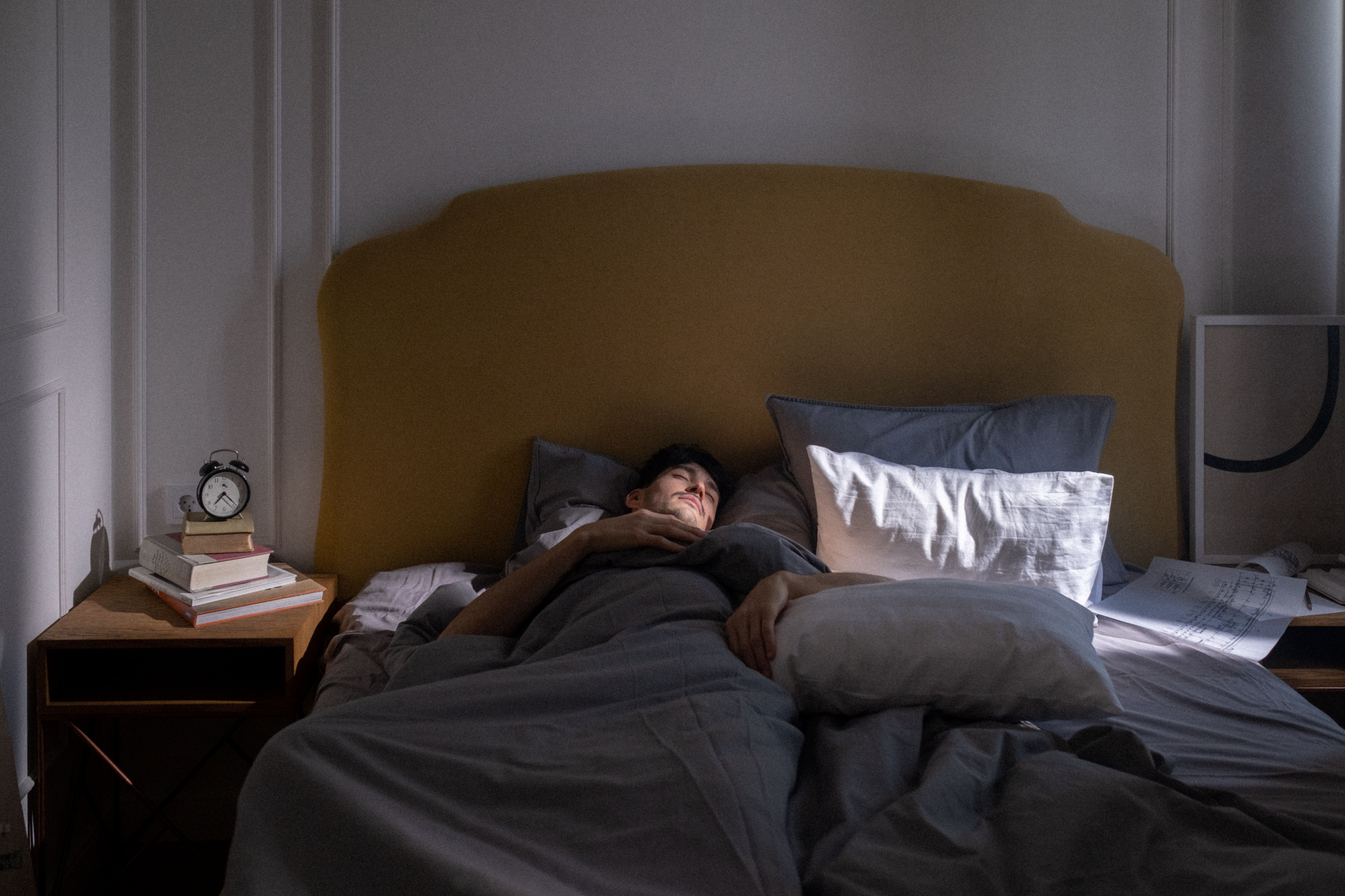
Quick Answer: If you work Second and Third Shift, pick an apartment by how quiet and dark it stays during your sleep window, usually 8 a.m. to 4 p.m. Check the shared wall, the unit's distance from parking and trash, window light leaks, and which amenity rooms run all day.
Second and Third Shift work pays a differential and costs you daylight. If you clock out at 11 p.m. or 7 a.m., the apartment that suits a 9-to-5 neighbor can be the one that wrecks you, because your bedroom hours line up with trash pickup, landscaping crews, and the pool speaker. Compass Flats in New Braunfels sits along the I-35 corridor, serving renters who drive to plants, hospitals, and distribution centers in both San Antonio and Austin.
What to Look For in an Apartment When You Work Second and Third Shift
Judge an apartment by how it behaves between 8 a.m. and 3 p.m., not by how it shows at 6 p.m. Check the wall you share, where the unit sits relative to parking and trash, how well the windows block light, and what the building runs during business hours. Most of that never appears on a listing page.
Start with the quiet neighborhood test, not the floor plan
Scrolling apartments near me at 2 a.m. after a shift will show you rent, square footage, and a photo of a pool. It won't tell you that a school bus stages across the street at 7:15. So go stand there instead. Park outside the property on a weekday morning, roll the window down, and listen for ten minutes.
Federal housing rules give you a useful yardstick. HUD's noise regulation sets an interior goal of a day-night average sound level of 45 decibels and treats sites at or below 65 decibels outdoors as acceptable, with a 10-decibel penalty applied to anything measured overnight (24 CFR Part 51). You aren't going to run a sound study on a tour. You can notice whether a frontage road, a rail line, or a fire station changes the number in your head.
Walls, doors, and what shift workers can verify on a tour
The International Building Code sets a minimum sound transmission class of 50 for walls between apartment units. That's a lab rating. Field performance usually lands several points lower once outlets, ducts, and unsealed penetrations get involved, which is why two buildings that both meet code can feel completely different.
Shift workers get better information from a walkthrough than from a spec sheet. Knock on the demising wall and listen for a hollow drum sound. Ask which unit shares your bedroom wall and what that neighbor does for a living. Open and close the front door, then look at the gap under it. Ask whether the bedroom sits above another unit's living room or above a garage.
Which apartment building amenities help or hurt daytime sleep?
Amenities are built for people who are awake in the evening. A gym, a game room, or a coworking lounge is a genuine perk on your day off and a genuine problem if it shares a wall with your bed. The question isn't whether a community has them. It's how far your unit sits from them.
Apartment building amenities that run on a business-hours schedule deserve the most scrutiny. Coworking spaces fill up between 9 and 4. Package rooms cycle all morning. Fitness centers get a lunch rush, and treadmill impact travels through structure, not air, so a wall alone won't stop it. Compass Flats lists its community amenity spaces online, and the useful exercise is mapping them against the studio and one-bedroom layouts before you pick a unit number.
Reading the apartments amenities list with a sleep schedule in mind
Sort the list into two columns in your head: things that make noise during the day and things that don't. A dog park is loud at 7 a.m. and 6 p.m. A pool is loud on weekend afternoons. A business center is quiet noise, but quiet noise still includes a door that latches forty times before noon. None of this disqualifies a community. It just tells you which building to ask for.
| Unit position | Main daytime noise risk | Day-sleeper verdict |
|---|---|---|
| Ground floor facing the parking lot | Car doors, engine starts, and delivery vans from mid-morning on | The hardest position to sleep in |
| Beside a stairwell or elevator | Footfall and door slams every time a neighbor leaves for work | Workable if the bedroom is on the far wall |
| Facing a frontage road or highway | Steady traffic hum that peaks right through your sleep window | Depends entirely on the glazing, so test it in person |
| Above or beside an amenity room | Music and treadmill impact during business hours | Fine for a living room, risky for a bedroom |
| Top floor, interior facing, away from amenity spaces | No footfall from above and less street noise | Usually the strongest pick for second and third shift |
Top-floor units carry their own tradeoff in Texas. Heat load is higher, the HVAC runs longer, and a loud air handler in the bedroom closet can undo everything you gained. Ask when the unit's system was last serviced.
Can you soundproof a rental bedroom yourself?
Partly. You can seal gaps, add mass at the door, and cover glass, and those three moves do most of the work a renter is allowed to do. What you cannot do is rebuild a wall, so a unit with a real structural problem stays a problem no matter how much you spend on it.
Do soundproofing panels actually work in a rental?
Not the way most people expect. The foam wedges sold as soundproofing panels are absorption products. They reduce echo inside a room, which helps a podcast recording and does almost nothing for the neighbor's television. Blocking sound takes mass and airtight sealing, not open-cell foam.
If you want to spend money here, spend it on the leak paths first. A door sweep, weatherstripping around the frame, and an acoustic caulk on trim gaps will outperform a wall of panels. Heavy dense panels or mass-loaded vinyl can help, though most leases won't allow the mounting they need.
What a noise proof bedroom door really means in an apartment
A truly noise proof bedroom door doesn't exist in rental housing, and any product promising one is selling you an adjective. What does exist is a much better door. Interior doors in apartments are usually hollow core, roughly a hollow box of thin veneer, and sound passes through them and around them freely.
Renters can still close most of that gap. Add a door sweep at the bottom, foam or rubber weatherstripping along the jamb, and a heavy curtain hung on a tension rod inside the frame. NIOSH also recommends blocking light coming in under doorways for anyone sleeping in daylight (CDC guidance on sleep environments). One fix handles both.
Frequently Asked Questions
1. Are senior living apartments or independent living apartments quieter than regular apartments?
Often yes, but they're age-restricted communities, so most shift workers can't rent one. Senior living apartments and independent living apartments tend to be quiet because of resident turnover and interior corridor design, not magic construction. Look for those same design features in a conventional community instead.
2. What time of day should I tour if I work overnight?
Tour during your sleep window, not after work. If you normally sleep 8 a.m. to 4 p.m., ask for a mid-morning appointment on a weekday. That's when landscaping, trash service, deliveries, and the amenity rooms are all running, which is exactly the noise picture you need to see.
3. Is a top-floor unit always better for daytime sleep?
Usually, though not automatically. Weigh these before you commit:
- No footfall or dropped objects from a unit above you
- Higher summer heat load, so the HVAC cycles more often
- Roof-mounted equipment can put mechanical hum right over the bedroom
- Stairs after a twelve-hour shift, every day, in both directions
4. Can I ask my property manager to enforce quiet hours during the day?
You can ask, and it's worth asking, but most quiet-hours clauses cover nighttime only. Raise your schedule at lease signing rather than after a conflict. In New Braunfels, ongoing nuisance noise complaints run through the city's Code Compliance division, though on-site issues are faster to resolve with your office.
5. Do blackout curtains matter as much as noise control?
They matter more than most people assume. Light is the strongest wake signal your body gets, and NIOSH tells shift workers to make the bedroom dark enough that you can't see your hand in front of your face. Blackout curtains are cheap, removable, and fix a problem no lease negotiation can.
Finding a Second and Third Shift Apartment That Lets You Sleep
Second and Third Shift renters aren't a small group. The Bureau of Labor Statistics found that 16 percent of wage and salary workers usually worked a non-daytime schedule in 2017 and 2018, including 6 percent on evenings and 4 percent on nights (BLS Job Flexibilities and Work Schedules). NIOSH has reported that 44 percent of people who usually work at night get six hours of sleep or less. Where you live won't fix your schedule, but it decides how much of that sleep you actually get.
If you're comparing communities along I-35 in New Braunfels, take the tour at your sleep hours and ask for a unit number, not just a floor plan. You can walk the property in the photo tour first, then call the leasing office to talk through which buildings sit farthest from the parking lot and the amenity spaces.